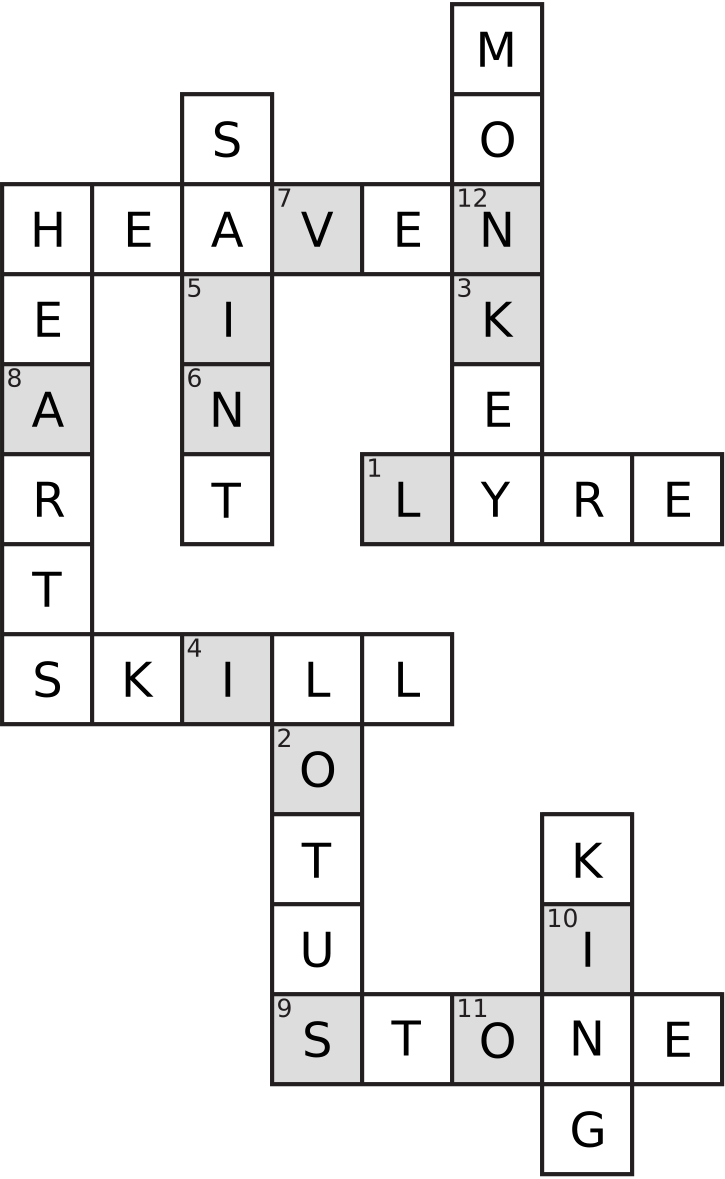
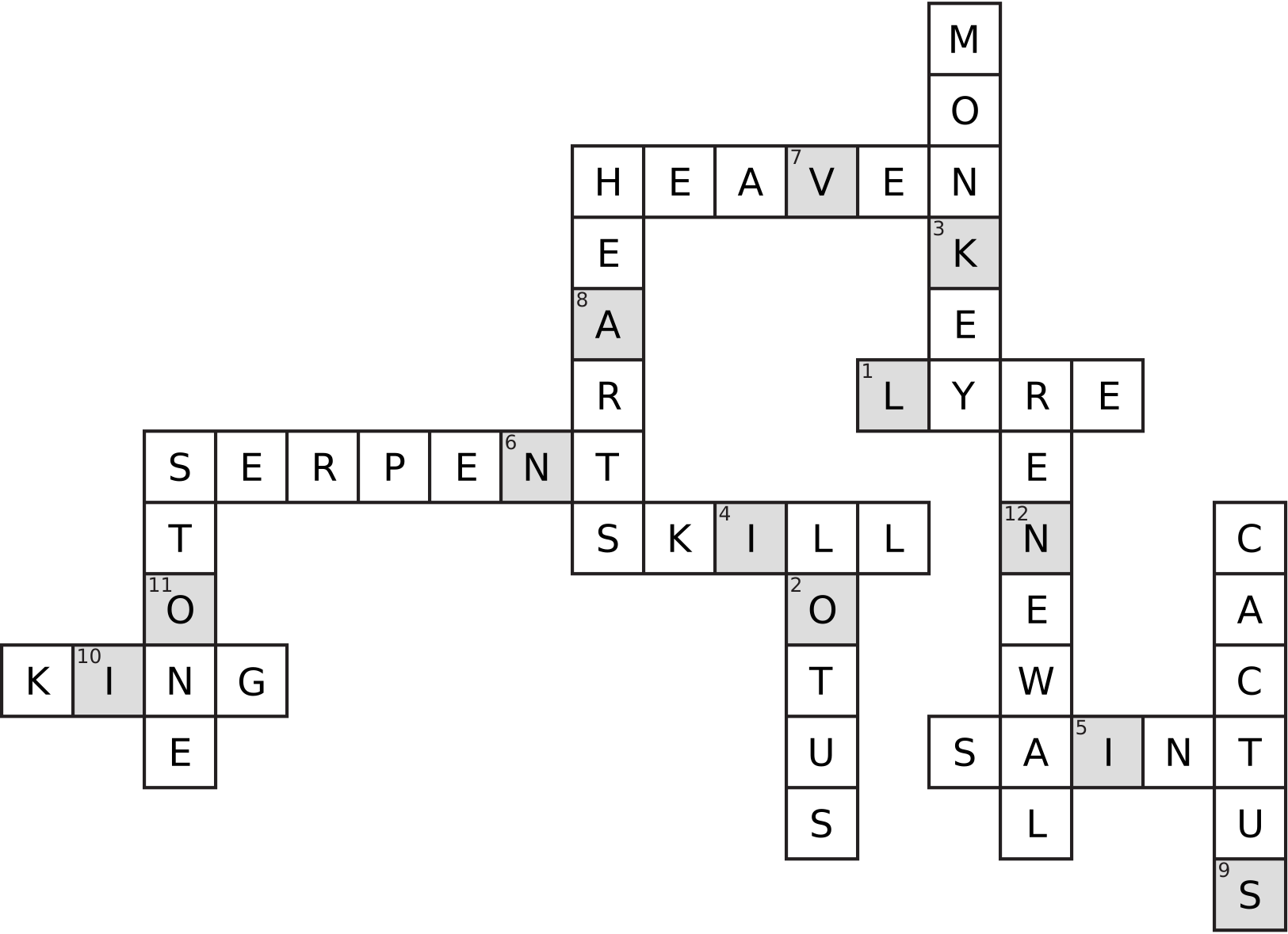
A Clash of Titans is a mythological Printer’s Devilry puzzle. Each of the given clues can be answered by a thematic word. After solving the clues, they can be filled into the provided grid with acrostic numbers indicating extracted letters. Reading the extracted letters in order yielded the answer to the puzzle: LOKI INVASION.
The hard version of this puzzle, in addition to lacking the basic explanation of how Printer’s Devilry works, had three additional clues and a different grid. The answer remained the same.
The clues below are shown with the missing word filled in (although not fully re-spaced).
| Hard-only | Clue | Answer |
|---|---|---|
| ✓ | After establishing Mexico as a democracy with a new constitution in 1824, the signers of there pub li C ACT USed the symbols of a perched eagle with a serpent on their flag, which was the sign the Aztecs were promised for where to build Tenochtitlan. | CACTUS |
| The jackal-headed Egyptian god Anubis was revered as the overseer of the afterlife and mummification. If you look at ancient painting St. HE ART S how shim weighing the souls of the dead against the Feather of Truth. | HEARTS | |
| Many pantheons have concepts of an afterlife or paradise, but Revelations in the Christian bible speaks specifically of walking T HE AVEN ue of pure gold toward the pearly gates. | HEAVEN | |
| The Roman god Jupiter was hidden away and replaced with a swaddled rock after hi s KIN G ot swallowed by their father Saturn. Jupiter freed the siblings and overthrew the titans to become ruler of Olympus. | KING | |
| In the Hindu creation cycle, Brahma springs from Vishnu's navel and creates time, space, and all beings. Vishnu, the preserver, sleeps on the cosmic ocean while this p LOT US ing his body unfolds. | LOTUS | |
| After Hermes stole Apollo's cattle, the Greek messenger go dab LY RE stored the peace with music. | LYRE | |
| The mayan gods attempted to make humans out of wood and discarded them, before finding the coms MONKEY to unlock success and made man from local maize. | MONKEY | |
| ✓ | Shiva the destroyer represents not just destruction, but a wide range of ascetic and passionate forces. He is the second most widely worshipped deity in the hindu diaspora, and along with some of the oldest shrines, mo RE NEW AL tars to him are still regularly built in India. | RENEWAL |
| The Celtic goddess Brigid represented a great deal of positive values like inspiration, healing, and fertility. Her influence has remained in modern Ireland even after the arrival of Christianity, where she adapted into another form and took a place alongside moth Erte re SA IN T he church. | SAINT | |
| ✓ | The nightly battle between Apophis and the sun god Ra in Egyptian mythology represented the eternal struggle between order and chaos. Each night as Ra entered the underworld, Apophis would rise and attack the solar boat, unleashing on the crui SER PENT up malevolence in an attempt to return the cosmos to disorder. | SERPENT |
| Vulcan, the Roman god of fire and metalworking, was also the patron of craftsmen. He represented the use of intellect over physical perfection in at a SK ILL ust rated often with a limp or other deformity. | SKILL | |
| Chinese folk mythology mostly focuses on one's own ancestors and local spirits, but one iconic figure is the mischievous monkey king Sun Wukong. He was born on the mountain of flowers and fruit, where the essence of the earth, sun, and moon were absorbed for thousands of years and at la ST ONE day an egg emerged. | STONE |